DSD Warns South Africans About Viral Fake Grant Message, No New Family Support Program
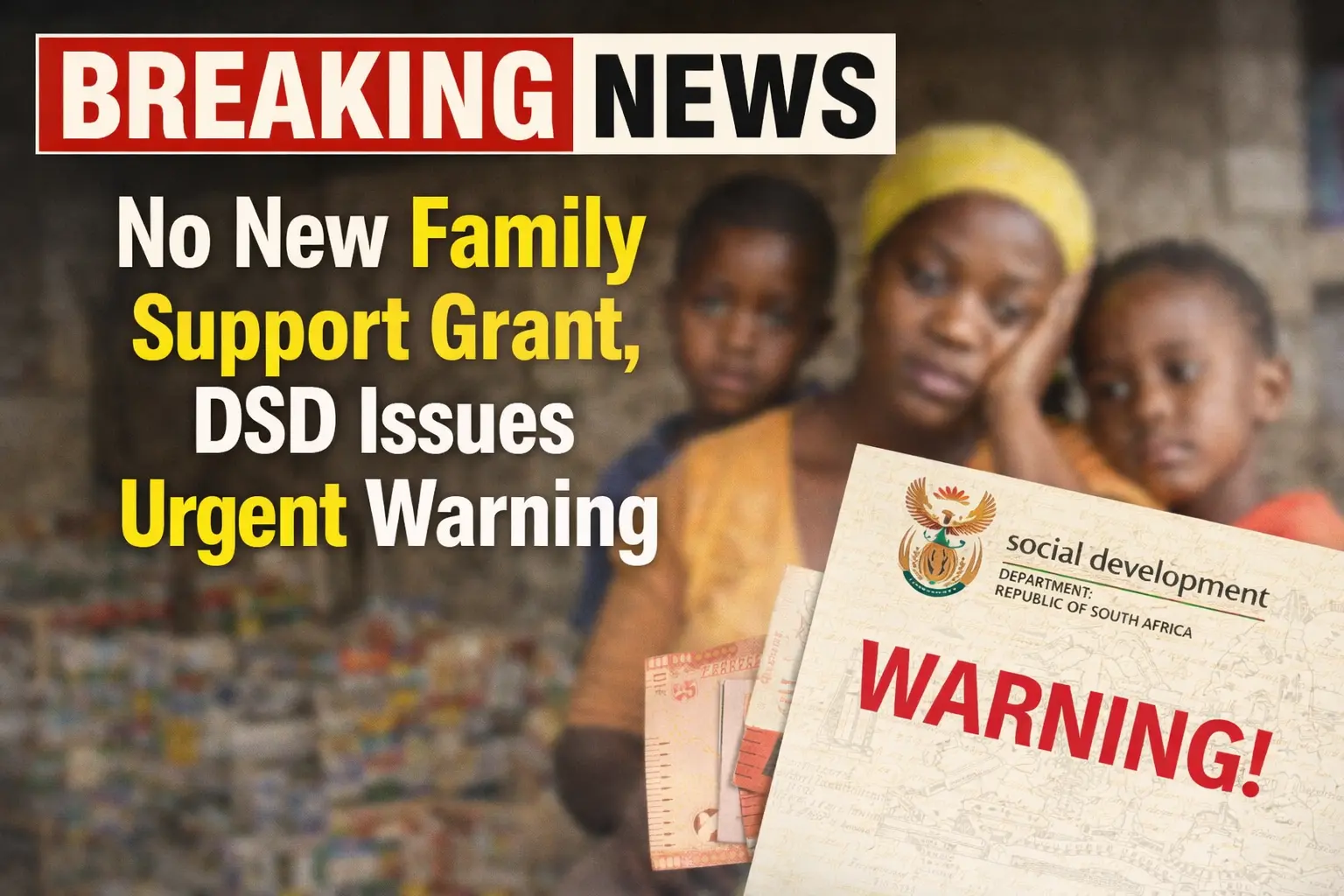
The Department of Social Development has warned South Africans not to trust a viral post about a new government payment. In a statement released on 1 December 2025, the department cautioned members of the public to be extremely vigilant about a fake message circulating on social media.
The post claims that President Cyril Ramaphosa instructed Minister Sisisi Tolashe to open registrations for a so-called family support payment worth R1 682 for three months. The department says none of this is true.
What the Message Claims
The message has been shared widely on Facebook and on more than one platform. It says that, because of complaints from families, the government is launching a new payment. It then asks readers to click a link and register.
According to fact-checkers, the link leads to a blog page and not to any official government website. Posts like this often ask for an ID number, phone number and banking details.
What the Department Said
The department chose to categorically dismiss the post as fake news. It said there is no such programme, no new cash allowance, and no registration process linked to the allowance named in the message.
Sandy Godlwana, acting head of communication at the department, said the message is a scam designed to mislead the public and potentially steal personal information through fraudulent links. Godlwana added that older people are often the main target of these schemes.
The department also stressed that official announcements on social protection programmes are issued directly by the department or by an entity linked to it, such as the South African Social Security Agency (SASSA) and the National Development Agency.
Not Linked to Any Real Payment
The message is fake and does not come from SASSA. No social grant is being added, and no payment amount has changed because of this post. Anyone who already gets support does not need to register for anything new.
SASSA warns beneficiaries regularly that it never asks for payment, PINs or passwords through social media. Money is paid only through the methods each person chose when they applied.
How to Spot a Grant Scam
The department continues to urge people not to share the message and to help stop the spread. Here are a few simple checks that can protect you and your family:
- Do not click on suspicious links in messages that promise money.
- Check whether the website address ends in gov.za.
- Be careful of posts that use photos of senior officials or the president.
- Never share your ID, bank details or PIN with anyone online.
- Report doubtful posts to the department.
A good rule is to treat any rumour about “new money” with caution until you can confirm it from an official source.
Where to Get Real Information
The department said people should always verify information through its official channels. These include:
- The official departmental website
- Official pages of those two agencies
- Verified government communication pages on social media
- The department’s WhatsApp channel
The department remains committed to providing reliable and accurate information and urges communities to rely only on these sources.
Not the First False Claim
This is not the first time a false post has targeted beneficiaries. In January 2026, the department also had to reject claims that the COVID-19 Social Relief of Distress (SRD) payment, first known as the R350, was about to end. That post used a photo of Tolashe and a made-up quote.
The department said that using its logo or her image without permission for misinformation is unlawful. It also reminded the public that this kind of content causes panic among vulnerable families who depend on their monthly payments.
Why This Matters
Millions of people rely on social grants each month. Officials warn that a single false message can circulate through a whole community within hours, especially in Facebook groups. When people share their details on false sites, criminals can use that information to open accounts, take loans or empty bank accounts.
The story received wide coverage in the media, including on SABC News, which describes itself as Africa’s news leader. The issue was also listed as a news alert on several government pages.
What to Do If You Already Shared Your Details
If you entered your personal information on the bogus page:
- Contact your bank immediately and ask them to block your account.
- Change any passwords you may have used.
- Report the matter to the police and keep the case number.
- Call the toll-free line on 0800 60 10 11 if your benefit details were shared.
The Bottom Line
The department has confirmed that there is no new family support payment. Only trust information that comes through official government channels, and help others by not sharing posts that cannot be confirmed.