How to Reapply for Your SASSA SRD R370 Grant
Most people who search for this don’t have to do anything. If your file is still active, the South African Social Security Agency screens it every month on its own, and the R370 keeps arriving without a fresh form.
Starting over is only for people whose old file is gone. It may have lapsed, been closed, or been cancelled so long ago that it can’t be switched back on. So before you fill in anything, work out which situation fits you.
First, check if you really need to reapply
Log in to the status page with your ID and phone. What you see there decides your next action:
- A list of paid, pending or turned-down periods means your file is alive. Leave it alone.
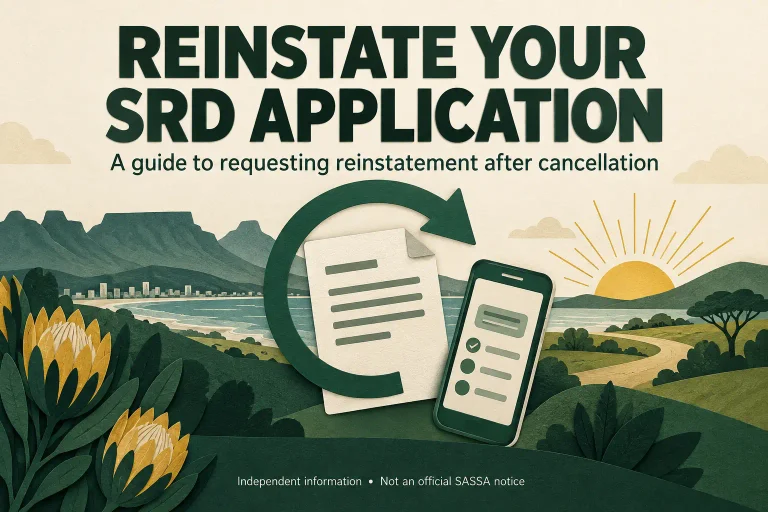
- A “cancelled” file should be reinstated, which is quicker than starting from zero.
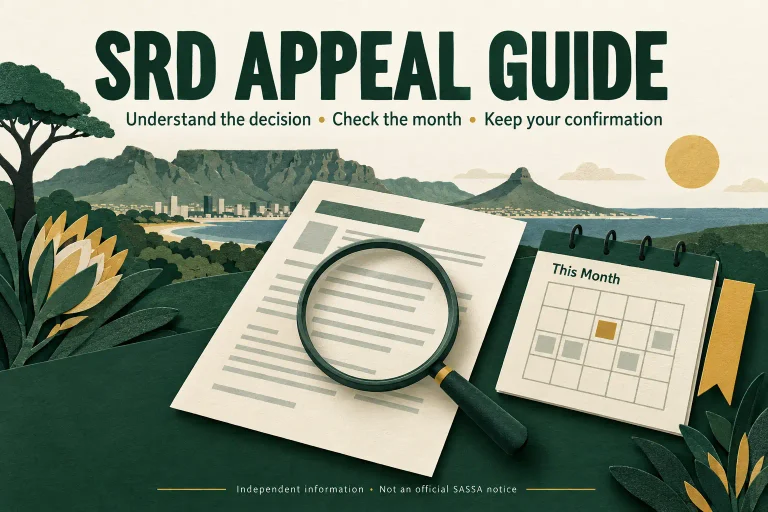
- One rejected period calls for an appeal, not a fresh form.
- No record at all, or a closed file, means it’s time to apply again.
This step matters more than people think. Only official SRD applications count, and sending a second one just confuses the system and slows down the review.
Where it all started
The relief started in 2020 as the Special COVID-19 SRD grant, worth R350. It went up by R20 in April 2024, and every existing beneficiary moved across automatically. In 2026 it was extended again, this time until 31 March 2027, at the same amount.
Filling in a fresh form online
The process takes about ten minutes on a smartphone.
- Open the official application page on SASSA’s website.
- Enter your 13-digit ID and your phone number.
- Wait for the one-time PIN message and type it in.
- Fill in your information and answer every question honestly.
- Add your cell phone number and banking details, then submit.
Here’s the important part. You can only register a bank account in your own name. The site warns that if the banking details do not belong to the applicant, the system will not verify the payment. Using a relative’s account is the most common reason a fresh form stalls.
It’s also not legal to use someone else’s identity, even with their permission. Every person gets one file, under their own details.
What happens next
Your details go through verification against bank and government records. At first the page will show pending. You can track progress on that same page, and you should get a notification by SMS once a decision is made.
If you’re approved, the first money usually lands near the end of the period. If the answer is a decline, read the reason before you do anything else. Many rejections come from old records, not real income, and those can be fixed.
Things that can change your result
If you start working, or your income rises above the limit, the R370 will not continue. Report it rather than wait for the system to flag you.
A new phone isn’t a reason to start over either. Update the number on your existing file instead.
Watch out for fake offers
SASSA requires applicants to use only its own website, its call centre and its offices. Ignore any Facebook group that promises faster results for a fee. That’s a scam. Anyone asking for your PIN, or sending a link to “unlock” your file, is almost certainly running something fraudulent.
If you’re stuck, contact the toll-free line on 0800 60 10 11. A real agent can help you see where your file stands and what to do next.
Quick answers
Can I start over right after my file closes?
Yes. If your file lapsed in January, for example, you don’t have to sit and wait for a set window. You can send a fresh request straight away.
How long does it take?
There’s no fixed time, because it depends on the background screening. Most people wait a few weeks, since everything about you is looked at from scratch.
Do I have to confirm anything afterwards?
Sometimes. SASSA occasionally asks people to reconfirm their details. Watch your SMS inbox and respond quickly when that happens.
If you log in and find no active file, reapply today and screenshot the final screen. That reference will save you a lot of trouble if something goes wrong later.